21 April 2008
20 April 2008
Reading medical memoirs
 It is probably not surprising that throughout my post-bacc career I have been reading a series of medical memoirs, novels, and essays. There was House of God, which everyone reads at some point (and I have been told to re-read in residency), Better and Complications, both by Atul Gwande (he's kinda famous among the medical set), The End of Medicine (by a finance guy) and the Man who Mistook his Wife for a Hat (pop culture famous book on neurology by Oliver Sacks).
I recently started one by a female neurosurgeon, Katrina Firlik, and I am struck by how familiar it all is. I work in neurology, not neurosurgery, but I have seen many of the conditions she talks about. She didn't have to explain holoprosencephaly or hydrancephaly; I've seen them. I certainly don't have the knowledge base of peds neuro resident or even probably a well-educated, interested medical student, but I am conversant with the best of them on a limited subset of conditions.
The other theme that strikes me is that I have already begun the personal transformation that comes with being a physician. Dr. Firlik spends time explaining the sense of humor in the OR, the detachment of the physicians, the cold practicality that contributes to efficient care in times of crisis, but these paragraphs already ring hollow. They are exactly how I would explain it to someone on the outside, but there is really no way to make it ring true unless you've been there. Patients will never quite understand how you can tell them the worst news of their life and then spend an enjoyable afternoon hiking.
There are lot of things you don't realise when you start down this road to become a doctor, but this one might be the biggest, the most subtle, and the most significant. There is no undoing the change in how you view people and sickness; in this one way you will forever be apart from your non-medical peers.
18 April 2008
Leashes on kids
 I must admit that subscribe to the idea best articulated on the Simpsons, "the leash demeans us both." But last Friday I met a mom who admitted to using a leash for her toddler and if I were her I would probably use one too.
Her child has a neurologic condition that, among other things, leaves her son both developmentally delayed and non-verbal. What this means is that while her son can walk and run and jump, he does not speak and has not yet learned common social cues.
The mom is clearly an involved and attentive mother, but as any mom or even babysitter can attest it is impossible to be watching every second of every day. What happens if she's paying for the groceries or using an ATM and he runs off? He can't say his name or who his mom is. He can't say where he lives or where he last saw his mom and we're not certain he would understand to look where he last saw her or follow a command given over a PA system.
Mom has sewn his name and address into all his clothes, just in case. She can't give him an ID necklace because he could hurt himself with it. He had a bracelet but he broke it - and the one before that. She's saving up to get one in a metal he can't break. What happens when he becomes coordinated enough to undo the clasp on it himself?
I don't think leashes are appropriate for most children, but I understand the trade-off here. I would also rather be the mom who gets stared at than the mom who loses her child.
14 April 2008
Shadowing cardiac anesthesia
First thing this morning I was standing in the middle of an honest to god surgical code.
The day started at 7:15am in the neonatal intensive care unit (NICU) for closure of a persistent ductus. The ductus arteriosus is a fetal vessel that connects the pulmonary artery to the aorta. It generally closes in the first few days of life; failure to do so can cause congestive heart failure. During the surgery, the ductus was severed from the aorta before it had been clipped, leading to massive bleeding (3-4x the infant's blood volume); the infant had no blood pressure or pulse for several minutes.
Here I should make several observations. First, the vessels in question are extraordinarily small and fragile in a newborn; looking at them wrong can cause them to tear (this was not a case of surgical malpractice). Second, it is not the surgeon who leads the resuscitation, it's the anesthesiologist. The surgeon is, of course, trying to stop the bleeding, but the person pushing blood and drugs through and controlling the chaos is the anesthesiologist. Third, codes are messy. By the time the infant was back there were empty syringes littering the floor and all available surfaces. At least 6 people had streaks of blood on them from loading or handling the syringes (they don't have needles, they are screwed into the IVs), there were towels everywhere, and there were twice as many physicians present at the end than when it all started. It's all hands on deck and I now understand why the prep beforehand is so specific and organized: everything gets labeled, unpacked, laid out in order, etc. We went straight from the NICU to the OR, where the patient was already prepped and under for a VSD patch and interrupted arch repair. A VSD is a ventricular septal defect (hole in the wall between the two large heart chambers) and it gets covered by a small graft. An interrupted arch is a little more complicated (a gap between the ascending and descending aorta) to fix (create the missing piece of aorta out of native and other tissue) and requires bypass and deep hypothermic circulatory arrest (DHCA). The body is cooled to 18 deg. C and all blood flow is stopped while the aorta is repaired. It turns out that shadowing the anesthesiologist gives you an unparalleled view of the surgical field so I was staring straight into the chest the whole time (photo, right) and watched the heart be cut open, closed, cannulated for bypass, decannulated, and an aorta fashioned, all in less than 3 hours.
At this point we took a break to get some juice and crackers on the way back to the NICU to check on the morning baby - doing well (needs a head ultrasound to check for bleeding). We then headed up the cardiac ICU (CICU) to debrief the interrupted arch parents and meet our afternoon case. The afternoon case was a pacemaker placement due to heart block. The parents were of the most over-zealous and anal retentive type and both the parents and the patient were all very heavy. Seriously, this kid had 20kg on me. This time I was there from the beginning and so witnessed prep and induction of anesthesia (including intubation). A sternal approach was chosen, which quickly proved difficult due to the child's weight. The surgeon was quite literally up to his wrists in adipose (fat) tissue before he could visualize any heart muscle (the leads are placed on the heart, the generator (photo, left) is placed at the lower edge of the ribcage). The first lead went on the first try. The second lead took two tries, but, success! The surgeon then hollowed out about a 1/3 cup of adipose tissue to make a pocket for the generator, which is about the size of a post-it note.
What struck me about both surgeries is now physical it is (breathing through a mask and standing still in one place for hours turns out to be harder than it looks) and how many more stitches it takes. If you think of a laceration that might bring you into the ER, you will get one layer of stitches. Closing the chest requires at least three layers of sutures; closing takes a good 15 minutes (depending on the size of the incision). I also noticed all the surgeons wore these nifty magnifiers clipped onto their glasses (no one seems to wear contacts) and headlights even with the the bright overheads. Lastly, the temperature in the OR is largely determined by the procedure - in a DHCA case the OR is cooled to help with cooling and then heated to help with rewarming. Oh - and no one played music.
Photos from google images. More about patent ductus arteriosus. More about interrupted aortic arch.
10 April 2008
Wiki project done!
 I recently finished one of the cooler projects I've ever been assigned in school: to publish a fully-cited Wikipedia page on a biochemistry topic of our choice. My topic didn't end up being as biochemical as I originally thought, but my professor allowed me to finish the project anyway because I was so invested in the subject.
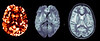
I chose to discuss Dentatorubral-pallidoluysian atrophy (DRPLA), a trinucleotide repeat, neurodenegerative disorder. It looks a lot like Huntington's and occurs with the same frequency in Japan, but it's extraordinarily rare in the West. Five families in the US have been identified; one of whom I met. The boy had the juvenile onset form (which presents with myoclonus - on EEG to the right) and passed away before he reached his 20th birthday.
To see my published page, type DRPLA into wikipedia or click here.
08 April 2008
Accidental photographer
 Apparently a photo I took while out one sunny day in Philadelphia has been selected as a finalist for a Schmap guide. This is the second time a photo of mine on Flickr has been noticed; a newspaper asked me for permission to use a photo I took of David Blaine in the fishbowl in NYC (remember when he lived underwater for 9 days in Lincoln Center?).
I'm generally not a talented photographer, but I guess blind squirrels really do find nuts once and a while.
06 April 2008
Idiocy of air travel
I flew out to Pittsburgh this weekend to re-visit the University of Pittsburgh School of Medicine. The flight to Pittsburgh was delayed two hours so my scheduled 7:10pm flight became a 9:10pm flight. There was another flight scheduled to leave at 9:00pm, also for Pittsburgh, which was running on time. After an announcement that the 9pm plane was not full, most of the people (including me) on the delayed 7:10pm flight rebooked onto the 9pm flight. At 9:10 they began boarding both flights simaltaneously. The delayed 7:10 flight was now practically empty, with fewer than 50 passangers booked, so I ran back to the counter and rebooked again, back onto the 7:10 flight.
I arrived in Pittsburgh at about 10:40 and headed straight to the tram that runs between the flight terminal and the baggage/ticket terminal. The tram broke down and we were stuck for about 20 minutes. Since we were in a tunnel our cell phones didn't work and no one was answering the emergency call button. Eventually the tram re-started and we made it to the baggage terminal.
I immediately headed outside to grab the bus into Oakland (a neighborhood in Pittsburgh) and watched one depart just as I got there. 30 minutes in the cold and another bus arrived (it's now a bit past 11:30pm). Who turns out to be on the bus? A former student of mine from when I was an economics TA who now hates his job in finance.
I did manage to get to my host MS1's apartment around 1am. I left my apartment at 5:10pm. That's almost eight hours and I didn't even leave the state.
31 March 2008
Clinic redux
Last Friday I shadowed an outpatient neurology clinic as I do once or twice a month; here are the highlights.
1. Childhood narcolepsy. This is diagnosed using a sleep latency test; abnormally quick decent into slow wave sleep indicated narcolepsy. Unfortunately, the normative data for children doesn't exist so it can be hard to definitively diagnose. An EEG is also a good idea to rule out seizures.
2. Autism. I've never seen autism to this degree before; the appointment was because of an increase in obstinate behavior. The child was barking intermittently and would lunge for any paper he saw (to eat it). He was pulling the threads out of his sweater and eating those too. The parents looked haggard and completely worn out; dad would jump at the slightest noise. Three clinicians saw the boy together to determine whether antipsychotics should be started or whether the current medications should simply have their doses tweaked.
3. Refractory status epilepticus. An adopted child who has failed five different kinds of anticonvulsants. In the last two weeks there have been no seizures, but the week prior there were two: 75 and 90 minutes in duration. An MRI and overnight EEG are on the table as the first step towards consideration of neurosurgery.
4. Cerebral palsy. Not usually something we see unless it's part of a larger issue, which, in this case, it was. We just don't know what the larger issue is. The part I want to bring up is that the leg muscles can get tight and force the knees to turn inwards. This realigns the hips; if left uncorrected, the hips can become painfully and permanently displaced.
5. Absence seizures with syncope. I have now met two children with this seizure type: they lose consciousness for the duration of their seizure. Invariably they are worked up by cardiology first and when they don't find anything, they send them to us and we hook them up to an EEG.

29 March 2008
Why so popular?
It mystifies me that the hands-down most often keyword-searched page on my blog is this post from July 26, 2006. It is far and away the most frequently visited page of my blog.
It turns out that if you google the words "screwdriver" and "chest," my blog comes up first. Cool.
Choosing a School
 I am sitting in the law library (view from my chair, right) working on my biochemistry term paper on dentatorubral-pallidoluysian atrophy (DRPLA), but my mind keeps wandering. I have now heard from all my medical schools and must begin choosing where I want to spend the next four years. I have narrowed it down to three at which I have been accepted: Michigan, Mt. Sinai or UPitt or two at which I have been waitlisted: WashU or UPenn.
I am content to live in any of the above cities and they will all cost me about the same amount of money, so how do I choose? I am so paralysed by the decision that I have actually asked several of the attendings I know at the hospital to rank them for me (which they did: Upenn got 3 votes and WashU got 1 for the top spot).
I think what makes it so difficult is that I would be happy at any of these schools. All of them set me up well for the future; there is no wrong choice. I am extremely fortunate to be in this position and I recognize that. But I still have to choose. And I am still stuck.
In the meantime, this paper still needs to be written. Back to biochem.
25 March 2008
Neonatal pre-op MRIs
One of the research studies I am involved in at the hospital includes performing an MRI immediately prior to the heart repair surgery of TGA and HLHS babies*. The baby we studied yesterday was oversized (due to mom's diabetes), but otherwise stable. The MRI revealed PVL,** which we have seen in 20% of patients prior to their surgery, and also a temporal lobe hemorrhage. We immediately called the surgeon to the MRI suite and a discussion ensued: what is the bigger danger - delaying the heart repair or potentially enlarging the bleed (the surgery would involved heparin, a blood thinner)?
We decided to delay the surgery and re-image the child in a few days to re-evaluate.
Sitting in on that discussion reminded me why I want to be a doctor. I've been losing the faith a bit with all the paperwork that is my job recently and this year long illogical waiting game of frustration that is applying. It was nice to have a reminder; hopefully I will get another one this Friday in clinic.
- - -
*TGA = Transposition of the great arteries. The aorta is connected to the right ventricle and the pulmonary artery is connected to the left ventricle, creating two independent circulations.
HLHS = Hypoplastic left heart syndrome. The left ventricle fails to form and the aorta is small and insufficient. Once the ductus closes, there is no systemic circulation.
**PVL = Periventricular leukomalacia, a white matter injury that occurs in pre-mature babies and is thought to be associated with mild cognitive problems.
24 March 2008
23 March 2008
When I grow up
Now that I am settled on becoming a physician, the next logical decision is what kind of physician I want to be? Granted, there are rotations in third year to help me decide. I can shadow practitioners to make an informed choice and then, of course, I must match in the specialty I hope for. But what am I hoping for? Surgery? Emergency medicine? Pediatrics?
My colleagues that the hospital have their opinion: surgeon. My friends in their internships have theirs: neonatal intensive care.
But the best way to solve this problem is clearly to take some form of internet quiz. So I took the Medical Specialty Aptitude test on the University of Virginia Health System website. Apparently, my top 5 specialties are:
1. Nephrology
2. Thoracic surgery
3. Aerospace medicine
4. Plastic surgery
5. Pathology
I no longer put any faith in internet quizzes.
17 March 2008
Postscript to Mr. Jobs
My computer was returned to me, however it was not fixed. Additionally, there were four notches on the optical drive that were not there when I brought the computer in for servicing. While the return invoice lists two "parts or services used," the optical drive needed three attempts to eject the first disc I put in.
I must now send my MacBook back in. Since I cannot do this at the moment (I need it for school and work), I have opened a case with AppleCare and will send it in April. How many times I must I send it in before you either a) successfully fix it or b) replace it?
Regards,
S
13 March 2008
Dear Mr. Jobs
I have owned a series of Apple products over the years, but my most recent purchase (A MacBook) has caused me more headache than any PC I ever owned.
Shortly after buying it, it began leaking battery acid. There is no Apple store in Philadelphia and the Support team did not want to mail a toxic product so I had to ask someone to drive it into New Jersey for me to swap it for a new computer. No one at Apple transferred the Applecare to the new serial number so several months later when the hard drive spontaneously failed I had to spend a day on the phone proving that the policy covered this new machine.
The hard drive was replaced and Apple thoughtfully replaced several of the case panels as well. However, the panel that includes the optical drive was warped so when I got the computer back, it no longer ejected discs. I was in the midst of exams (and there is no Apple store in Philadelphia) so I waited three weeks until I could get to NYC to take it to a genius bar. Ruth (the genius) couldn't fix it in the store but she assured me that as a bounce-back repair it would be covered and I should have my computer back in 7 days.
It's day 5 and I just checked my status online. Apparently the repair has been on hold (since March 11, it's now the 13th) and no one called me, so I called Applecare. I spoke with Dan and Kendra and neither could tell me anything other than "wait for the depot to call you, they might not cover this repair."
I'm flabbergasted. Apple took it upon themselves to repair a part that was not broken and now, after a botched repair, won't fix their mistake. This is the third time this computer has needed repair! I need my computer to do my schoolwork and pay my bills - if there was a problem or delay, why did no one at Apple contact me?
I am purchasing a new computer this summer for medical school and the experience with this latest MacBook (less than 2 years old!) has forced me to seriously reconsider my stance on PCs. They might be equally much trouble, but they are much cheaper. If the product and service are going to be this poor either way, I might as well save my money.
Mr Jobs, I'm very disappointed. I think Apple makes innovative products, usually worth their higher prices. But apparently the quality and service are inverse to your company growth.
Please, fix my MacBook and send it back!
12 March 2008
Medical School Update
Because no, the process is still not over.
Applied: 23
Interviews: 13
Of the schools who gave me interviews:
Withdrawn: 2
Waitlisted: 2
Accepted: 5
Of the schools who have accepted me, I have declined 2.
As you can tell, I'm still waiting for 4 replies. I will be rejected by the 10 schools that didn't interview me (I received 6 of those letters already).
Deadline for the final decision: May 15th.
11 March 2008
Yummy!
 We were talking about oatmeal chocolate chip cookies all day so when I got home I just had to make some. I didn't have any brown sugar so I used white sugar and maple syrup instead (and added a little extra flour) - they came out very moist and chewy... yum!
12 February 2008
Different and unequal
Nicholas Kristof took a break from the third world to write a column on the public perception of women leaders.
This creates a huge challenge for ambitious women in politics or business: If they’re self-effacing, people find them unimpressive, but if they talk up their accomplishments, they come across as pushy braggarts. The broader conundrum is that for women, but not for men, there is a tradeoff in qualities associated with top leadership. A woman can be perceived as competent or as likable, but not both.... Professor Duflo and her colleagues found that by objective standards, the women ran the villages better than men. For example, women constructed and maintained wells better, and took fewer bribes. Yet ordinary villagers themselves judged the women as having done a worse job, and so most women were not re-elected. Professor Duflo asked villagers to listen to a speech, identical except that it was given by a man in some cases and by a woman in others. Villagers gave the speech much lower marks when it was given by a woman.
In response there were the expected anti-Clinton posts, the sexism-is-dead posts, and the not-feminism-again posts, but the one that pissed me off enough that I had to write was this one (by Nathan N):
To think that gender or race is even remotely relevant and anything other than a complete “red herring” is an intellectual confusion. To illustrate my point, it may be interesting to wonder whether horses or oxes as a group run faster. But when you have one actual horse and one actual ox and want to know which one runs faster, all the statistics and knowledge about how fast or slow the members of the two classes of animals generally run become completely useless. All we need to do would be to let them race and see which one runs faster.Actually, Nathan, I believe you are intellectually confused. And to boot, you totally missed the point. In your horse and ox example, Kristof's point would most closely be translated to the observation that even if the horse and ox raced with the same time, the ox would be thought of as the faster animal. In fact, your argument is negated by the example in Kristof's article - in an objective measure of governing fitness women did better but were kicked out more often.
Not to mention the fact that in a timed race there is an objective standard whereas a public election is not only subjective, but filtered by the media. The effects of this subjectivity are seen for both genders; some of the most qualified candidates lost early in the primary season due to a lack of media exposure and having more substantive credibility than stylish panache.
And to all the people who responded to his column, Kristof wasn't making a case for Hilary. He was making a statement about how in some situations democracies can empower the very prejudices the system is trying to protect against. If you're going to respond to an article, at least read it first.
28 January 2008
It's not all in my head
In medicine, we call it emesis. The other research assistants favoured the term "booting." Whatever you call it, I was holding the sides of a toilet and vomiting neon yellow bile yesterday one hour after watching a neonatal autopsy.
The baby in question was about one week old and died shortly after surgery to embolize a vein of Galen malformation. Basically, the baby was born with an extremely large vein in the brain -- this causes low blood pressures in the arterial system and high venous pressure (reversal of normal, also termed persistent fetal circulation). One potential repair is to fill the vessels feeding the oversized vein with glue (yes, literally glue) to lessen the amount of blood flowing through the malformation and restore normal blood pressures. This baby died shortly after surgery after two mysterious distended abdomen complications and difficulty ventilating.
An autopsy is not an elegant or a respectful procedure. The body is handled roughly, like an object, and no care is made to preserve the features that viscerally remind us of the corpse's humanity. The first part of the autopsy was an excision of the brain done with incisions from each ear to the center top of the head. The face is then peeled down and the skull cut into 4-5 triangles, which are peeled open like a flower to provide unhindered access to the entire brain. Unlike television, the baby bled when it was cut; this is not CSI, the bodies are not embalmed prior to examination.
Upon opening the skull it was immediately evident that there had been a substantial subdural and subarachoid hemorrhage (bleeding in the space between the brain and it's covering layers, the meninges). Thus, there was a lot of blood and it lots of gauze was required to visualize the venous system within the brain (you can see the vein of Galen by pushing apart the two hemispheres, gently). The spinal cord was then severed and the brain extracted and placed in diluted formalin to "set" for two weeks before the brain cutting (serial sectioning of the entire brain and spinal cord).
Once the brain is removed the face is pulled back up, but the skull is left open. The next question was what substance was filling the belly. To see whether it was air, the baby was submerged in a basin of water and a hole poked in the abdomen to see if bubbles would result. No bubbles. The body was removed from the basin and held upside down to let the (empty) skull drain (it filled with water when submerged: no brain, remember).
A Y incision was made, which is really more of a U from nipple to nipple and then a line down past, but around, the belly button. Care has to be taken not to cut to deeply, only skin and fat, not the organs beneath. Once you cut into the body, yellow liquid runs off - I think it's the water mixing with the fat (adipose) tissue.
A probe was used to spread the skin around the abdomen and below - the baby had no testicles in the scrotum so, where were they? Gently the intestines were pulled out (not all the way, just a bit) and nudged sideways so that there was a view of the interior of the body cavity. One of the intestines was brown (my guess: large) and the other more greenish (my guess: small), but both smooth and slimy. The testes looked like miniature pearl onions and they were floating off on the left side, not in the track they descend down so something was wrong there.
I didn't get to see then crack the chest because at that point we had to go see another (living) patient. Frankly, I think this was about as much as I could handle... I mean, this was a newborn and it didn't look dead.
While I was in there, watching, I felt mostly fine. I had a low level of queasiness, but I was interested in what I was learning about anatomy and pathology. My brain was on board, but my body was apparently not. I think there is something primal within that rejects the desecration of your own species and produces a visceral reaction. I was told you learn to control it, but that it never really goes away and to be honest, I'm glad. I'm even a little proud that I got sick (especially that I held it together until later, when none of the doctors could see) because it proved that despite my ability to be detached, I have not lost my empathy.
You're probably thinking... but you're going to do this in gross anatomy. Well, yes and no. One, those bodies are preserved (less blood). Two, they are skinned (much less human looking). Three, the faces are draped (again, less human looking). Four, they are adults, not babies. But, yes, I will have to touch dead bodies again.
And if I "boot" when I do it, I promise to tell you all.
Subscribe to:
Posts (Atom)